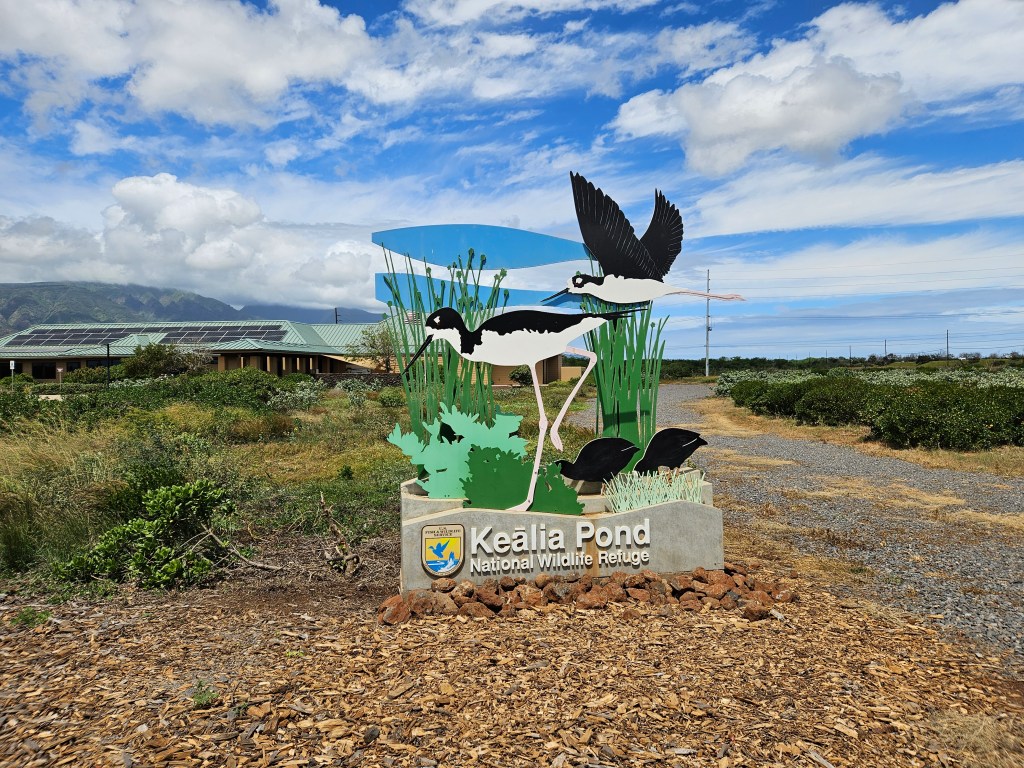
My winter in Maui is, once again, coming to an end. It’s my luck, at least, to end it with a sunny clear day and a visit to the bird sanctuary and wetland known as Kealia Pond.
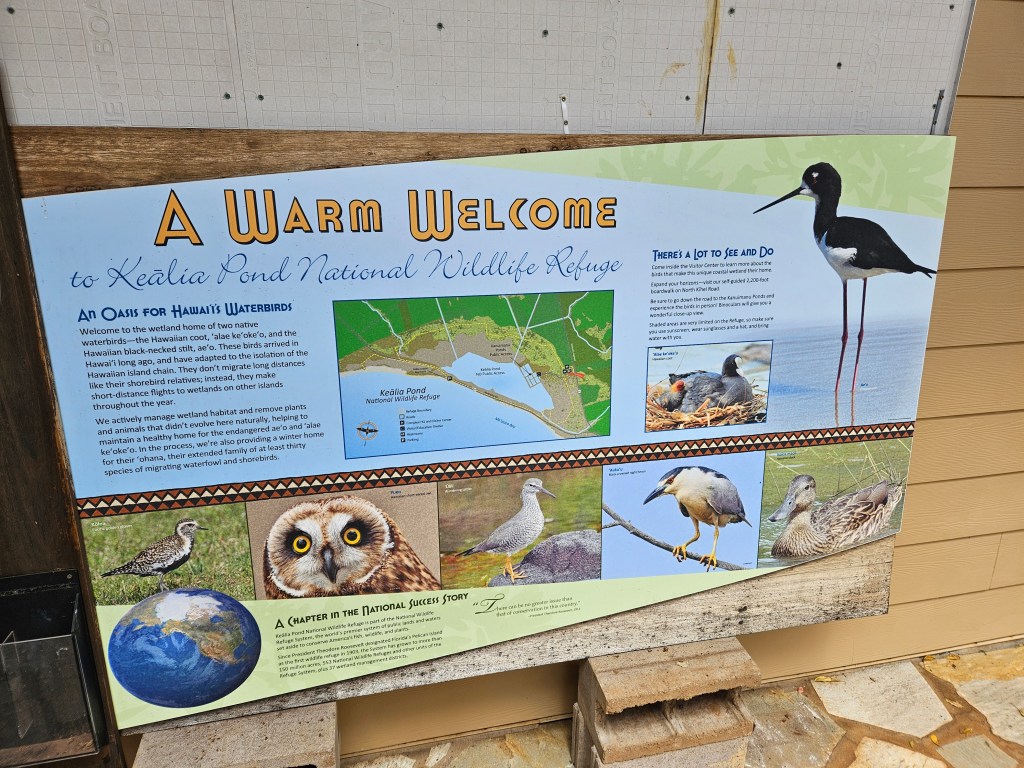
Kealia is a large area encompassing much of the southern Central Valley of Maui; a drainage for the West Maui Mountains and the end point for much of the Baldwin agricultural runoff. The wetland itself runs along Sugar Beach to it’s south and is bounded East and West by the Piilani Highway and Maui Power Plant, respectively.
Although it did not enter the National Wildlife Sanctuary program until 1992, it has seen varied use by people since the first Hawaiians arrived. The wetlands have always been a natural buffer between the ocean and the hot interior of the island, providing shelter and feeding ground for Maui’s birds and fish. The ponds themselves do not drain in to the ocean except at period of high flow. And with the current diversion of water to Maui’s agricultural fields, the pond levels are more a consequence of anthropological management than climate.
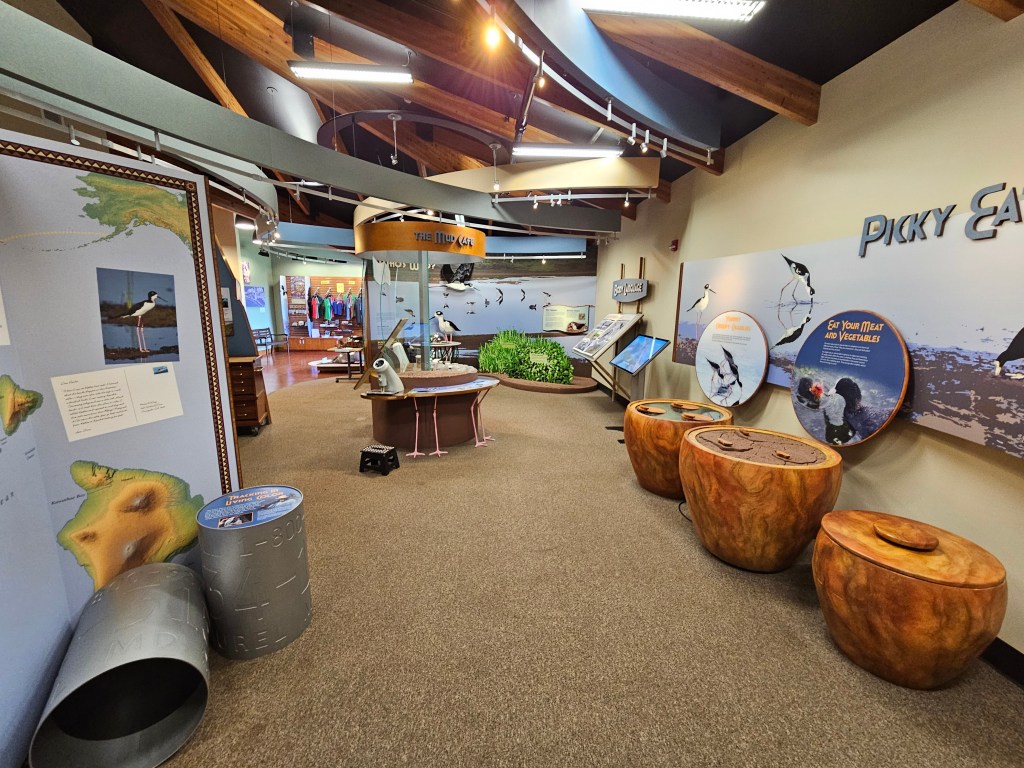
Kealia can be accessed one of two ways: the recently reopened visitor center off the Piilani Highway, or the boardwalk along Sugar Beach. I haven’t been to the visitor center, although it originally opened way back in 2012, so I decided to start there. The building is unassuming, but an excellent place to become acquainted with the refuge. It has what you would expect from a visitor center: a breakdown of the history and biology of the refuge, areas for student groups and presentations, daily report resources for birders, and a small gift shop. Shout out to the very pleasant docent at the front desk who oriented me to the interior pond area and pointed out some of the seasonal migratory and endemic birds that had been recently spotted.
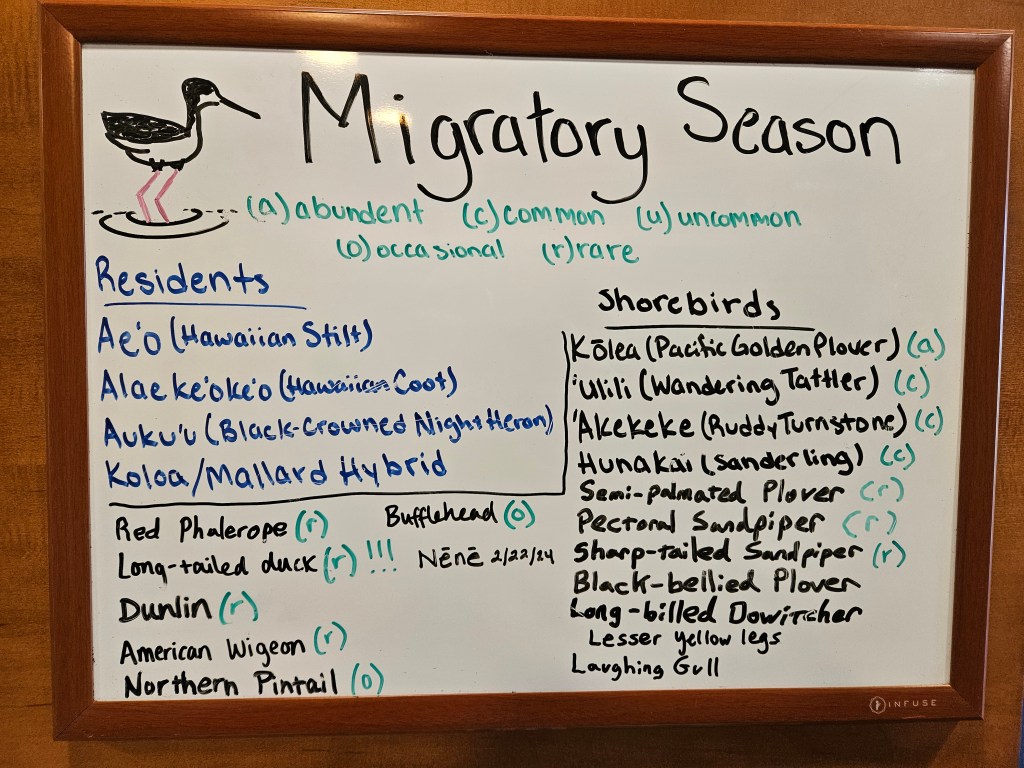
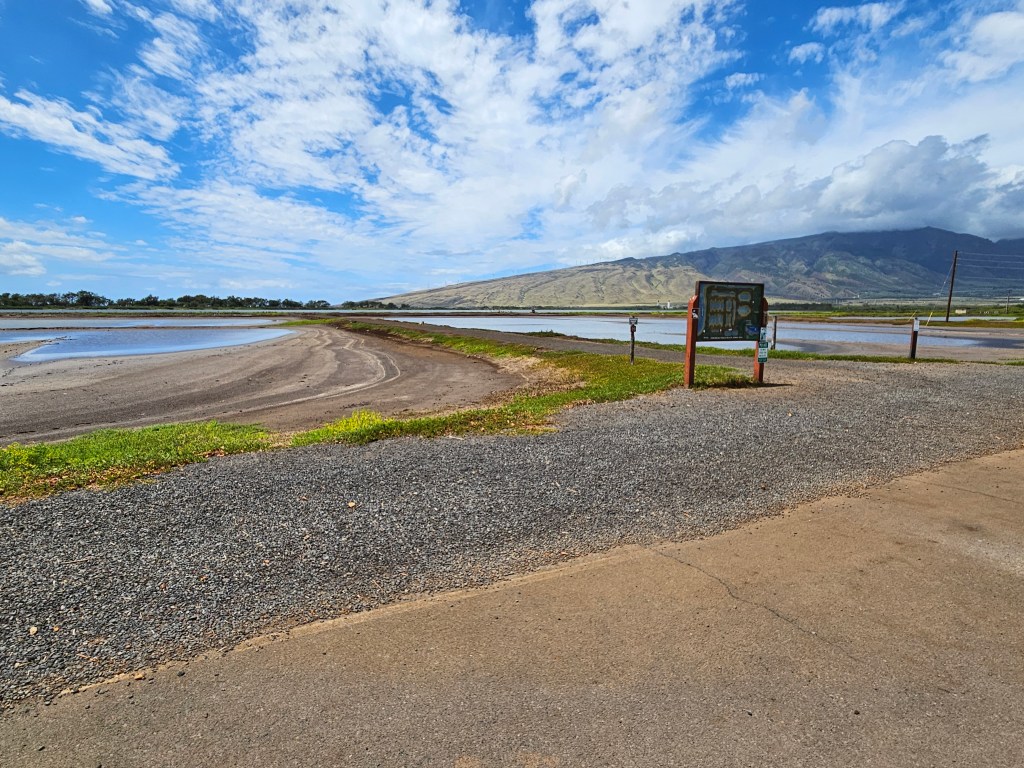
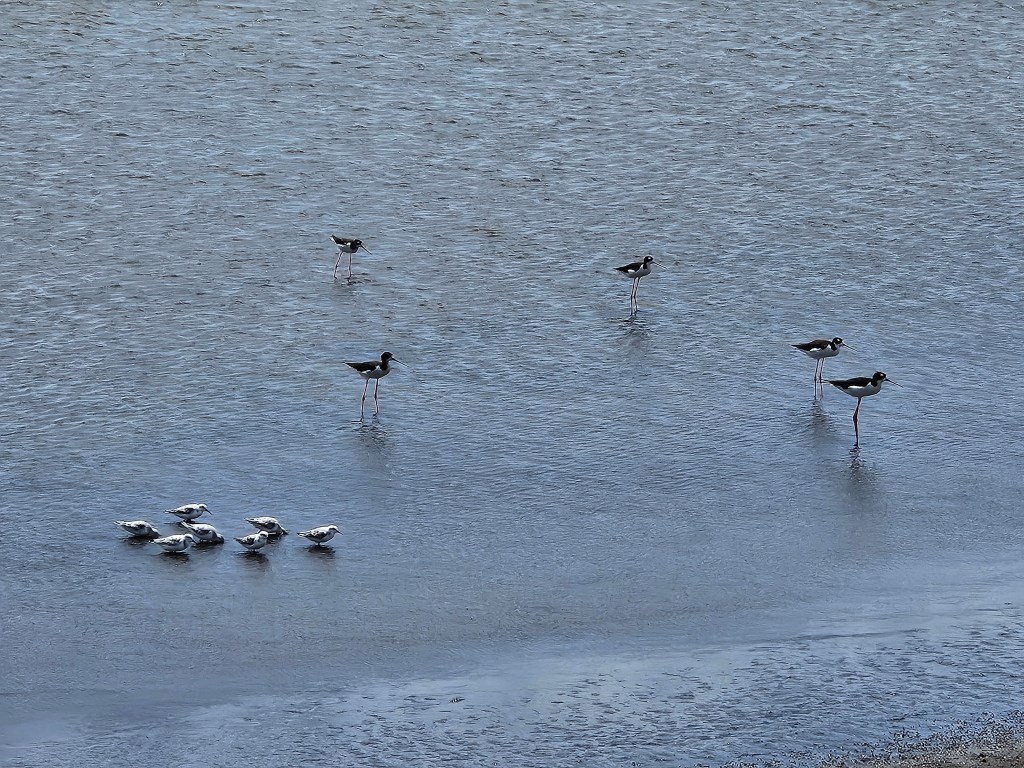
The interior of the refuge is laid out in a series of managed ponds. Right now it is coot and stilt nesting season, and there are plenty of both to see. I walked along several of the berms out to the farther ponds, but with only a pair of pocket binoculars and casual patience, I didn’t spot much else of note. I’m sure more intrepid birders could pitch chairs and sit out all day checking off their lists. I did manage to spot a gaggle of stilt chicks and one of the local Hawaiian ducks, along with many many adult coots and stilts.
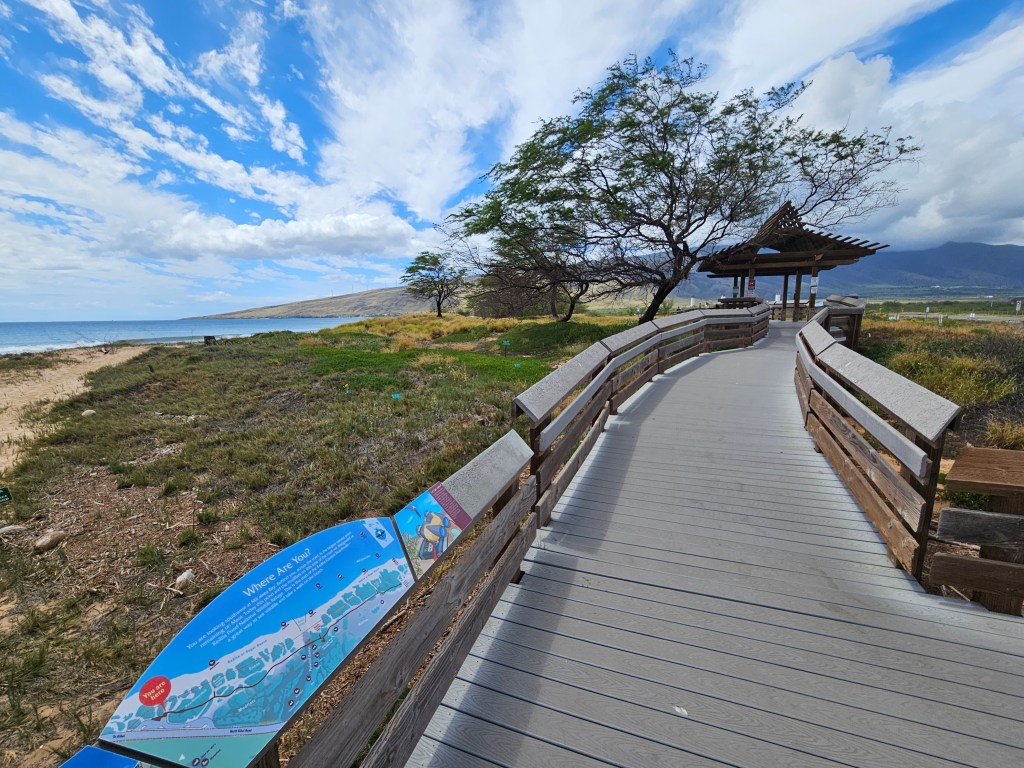
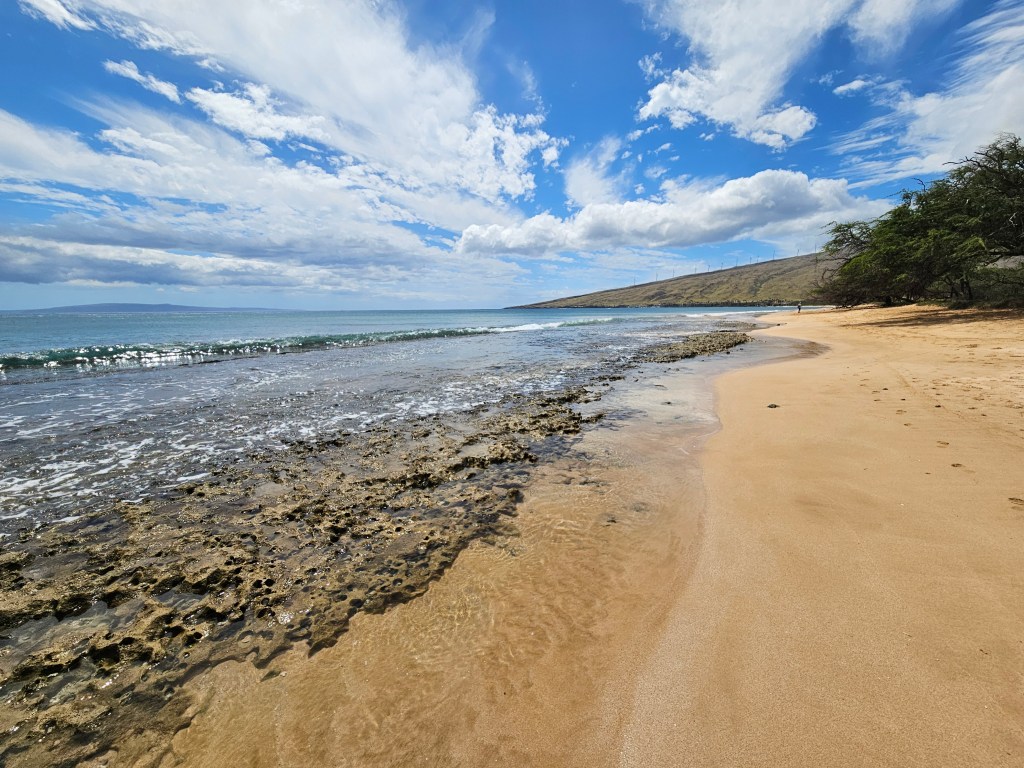
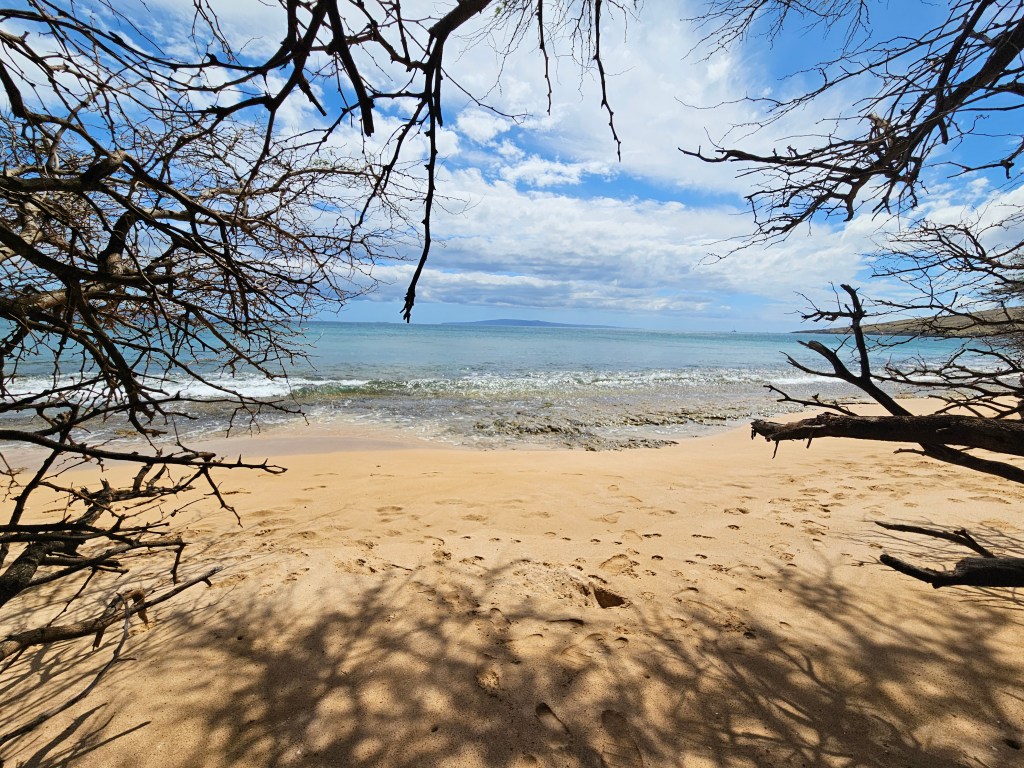
To the southern exterior of the refuge is Sugar Beach and the Kealia Boardwalk. I’ve been down here many times, and it makes for an excellent place to really stretch and take advantage of the longest beach on Maui, and one that is rarely heavily occupied. When I first moved to the island the boardwalk was a rickety wooden mess, but they’ve replaced most of it and it makes for an enjoyable way to access the beach. I didn’t see much wildlife of note, but the weather was gorgeous.
So, there it is, Kealia Pond. And with that, my time in Maui comes to an end for the year.

 Anthologia
Leave a comment